










SOUTHPORT

Southport is a large seaside town in Merseyside, England. At the 2001 census, it had a population of 90,336, making it the eleventh most populous settlement in North West England.
Southport lies on the Irish Sea coast and is fringed to the north by the Ribble estuary. The town is 16.7 miles (26.9 km) north of Liverpool and 14.8 miles (23.8 km) southwest of Preston.
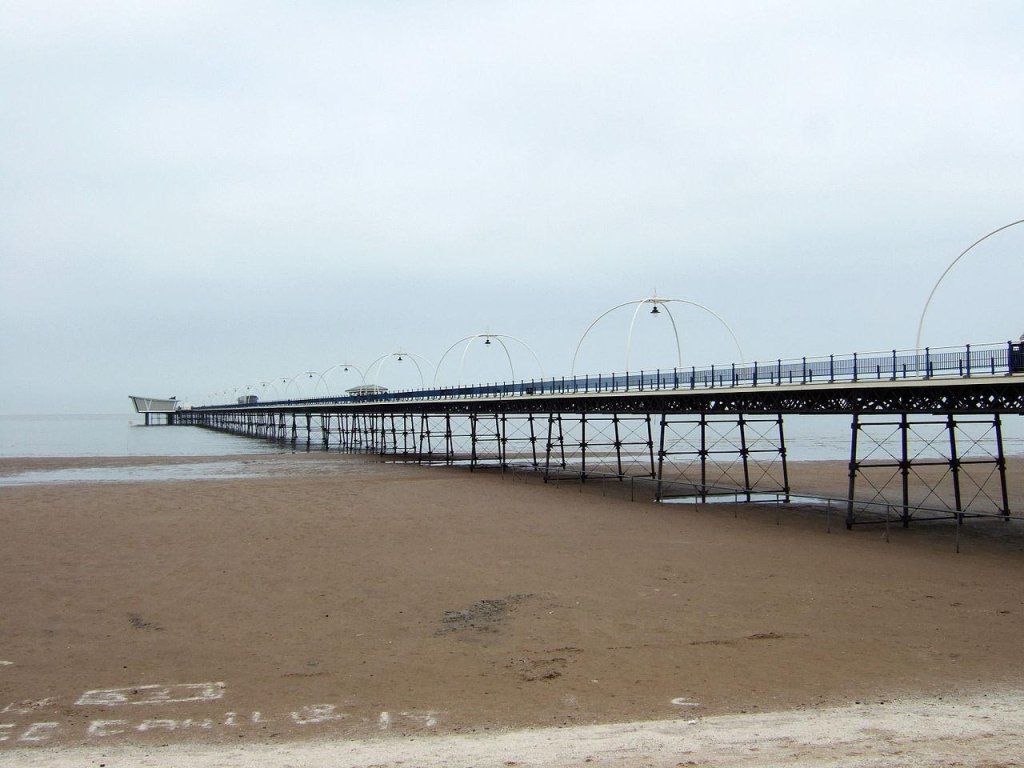
Within the boundaries of the historic county of Lancashire, the town was founded in 1792 when William Sutton, an innkeeper from Churchtown, built a bathing house at what is now the south end of Lord Street. At that time, the area, known as South Hawes, was sparsely populated and dominated by sand dunes. At the turn of the 19th century, the area became popular with tourists due to the easy access from the nearby Leeds and Liverpool Canal. The rapid growth of Southport largely coincided with the Industrial Revolution and the Victorian era. Town attractions include Southport Pier, the second longest seaside pleasure pier in the British Isles, and Lord Street, an elegant tree-lined shopping street.
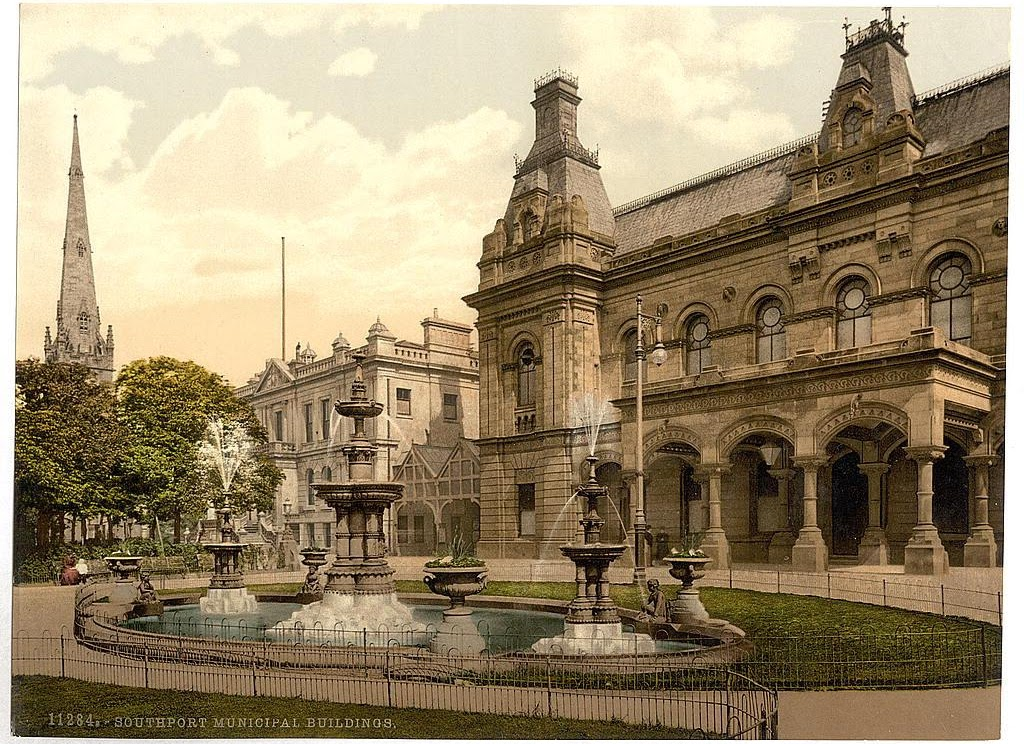
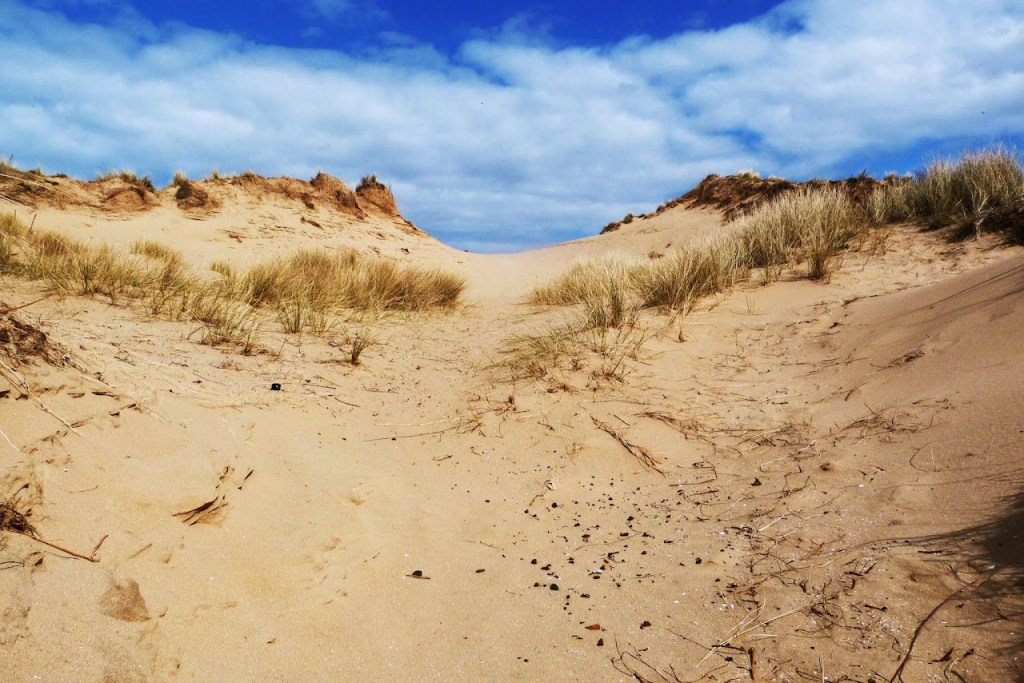
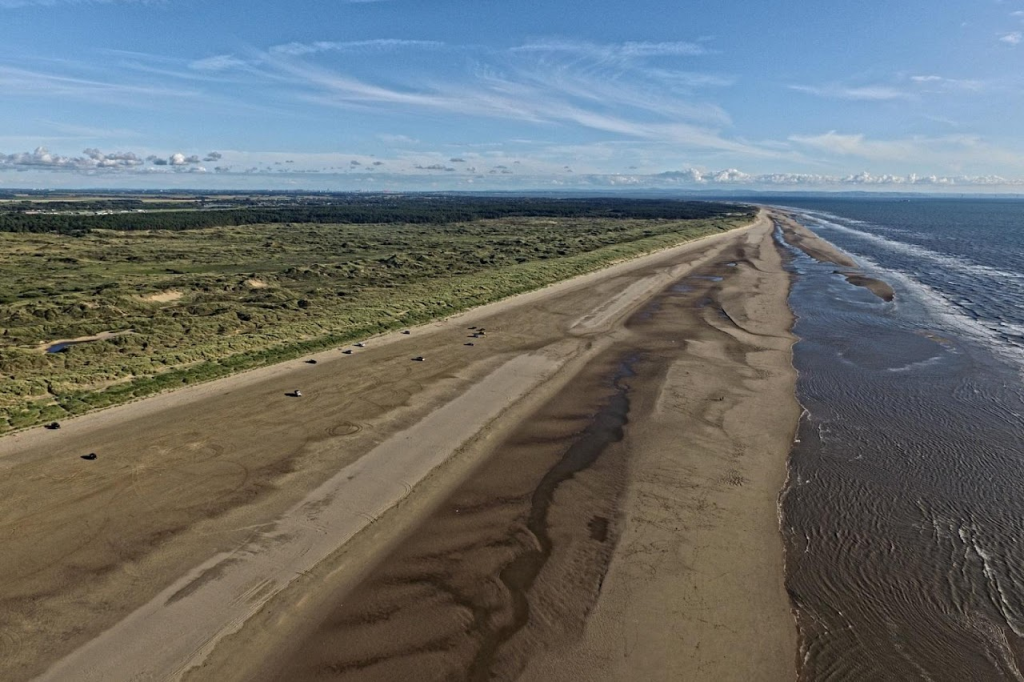
Extensive sand dunes stretch for several miles from Woodvale to Birkdale, the south of the town. The Ainsdale sand dunes have been designated as a national nature reserve and a Ramsar site. Local fauna include the natterjack toad and the sand lizard. The town contains examples of Victorian architecture and town planning, on Lord Street and elsewhere. A particular feature of the town is the extensive tree planting. This was one of the conditions required by the Hesketh family when they made land available for development in the 19th century. Hesketh Park at the northern end of the town is named after them, having been built on land donated by Rev. Charles Hesketh.[Southport today is still one of the most popular seaside resorts in the UK. It hosts various events, including an annual air show on and over the beach, the largest independent flower show in the UK (in Victoria Park) and the British Musical Fireworks Championship. The town is at the centre of England’s Golf Coast[11] and has hosted the Open Championship at the Royal Birkdale Golf Club.
History
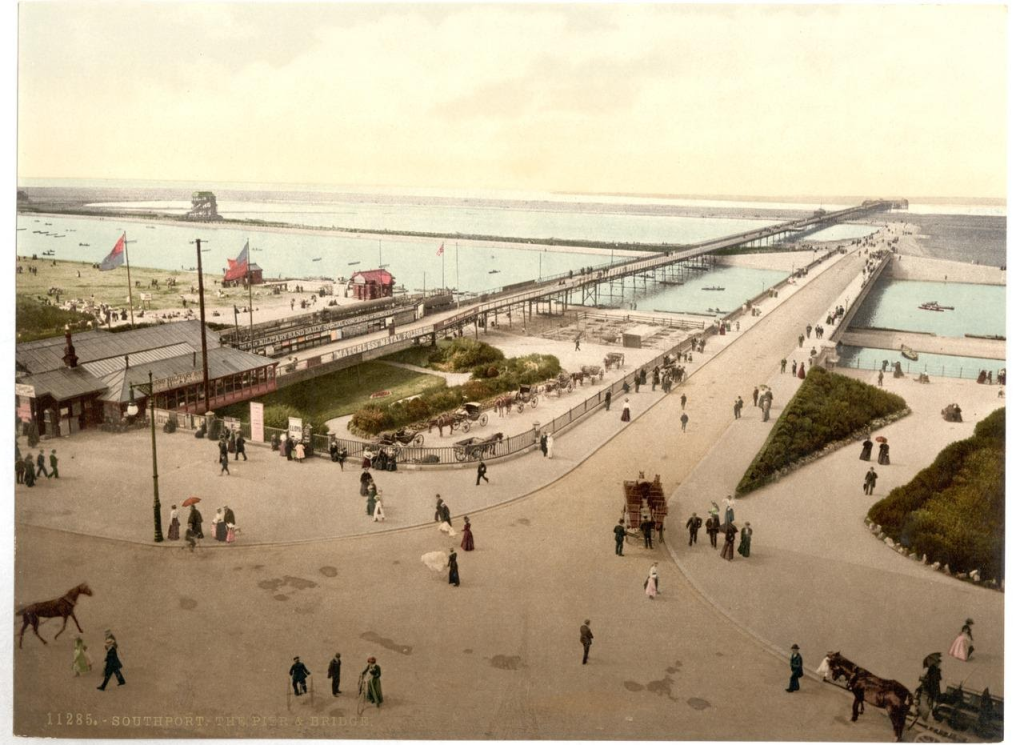

There have been settlements in the area now comprising Southport since the Domesday Book, and some parts of the town have names of Viking origin.[12] The earliest recorded human activity in the region was during the Middle Stone Age, when mesolithic hunter gatherers were attracted by the abundant red deer and elk population, as well as the availability of fish, shellfish and woodland.
Roman coins have been found at Halsall Moss and Crossens,[13] although the Romans never settled southwest Lancashire.
The first real evidence of an early settlement here is in the Domesday Book, in which the area is called Otergimele. The Domesday Book states that there were 50 huts in Otergimele, housing a population of 200. The population was scattered thinly across the region and it was at the northeast end of Otergimele (present day Crossens), where blown sand gave way to alluvial deposits from the River Ribble estuary, that a small concentration of people occurred.
It was here, it seems, that a primitive church was built, which gave the emerging village its name of Churchtown, the parish being North Meols (pronounced “meals”, not “mells”). A church called St Cuthbert’s is still at the centre of Churchtown.
With a booming fishing industry, the area grew slowly and hamlets became part of the parish of North Meols. From south to north, these villages were South Hawes, Haweside, Little London, Higher Blowick, Lower Blowick, Rowe-Lane, Churchtown, Marshside, Crossens, and Banks.[14] As well as Churchtown, there were vicarages in Crossens and Banks.
Parts of the parish were almost completely surrounded by water until 1692 when Thomas Fleetwood of Bank Hall cut a channel to drain Martin Mere to the sea.[15] From this point on, attempts at large-scale drainage of Martin Mere and other marshland continued until the 19th century, since when the water has been pumped away. This left behind a legacy of fine agricultural soil and created a booming farming industry.
In the late 18th century, it was becoming fashionable for the well-to-do to relinquish inland spa towns and visit the seaside to bathe in the salt sea waters. At that time, doctors recommended bathing in the sea to help cure aches and pains. In 1792, William Sutton, the landlord of the Black Bull Inn in Churchtown (now the Hesketh Arms) and known to locals as “The Old Duke”, realised the importance of the newly created canal systems across the UK and set up a bathing house in the virtually uninhabited dunes at South Hawes by the seaside just four miles (6 km) away from the newly constructed Leeds and Liverpool Canal and two miles southwest of Churchtown.
When a widow from Wigan built a cottage nearby in 1797 for seasonal lodgers, Sutton quickly built a new inn on the site of the bathing house which he called the South Port Hotel, moving to live there the following season.[16] The locals thought him mad and referred to the building as the Duke’s Folly, but Sutton arranged transport links from the canal that ran through Scarisbrick, four miles from the hotel, and trade was remarkably good. The hotel survived until 1854, when it was demolished to make way for traffic at the end of Lord Street, but its presence and the impact of its founder are marked by a plaque in the vicinity, by the name of one street at the intersection, namely Duke Street, and by a hotel on Duke Street which bears the legacy name of Dukes Folly Hotel.
Southport grew quickly in the 19th century as it gained a reputation for being a more refined seaside resort than its neighbour-up-the-coast Blackpool. In fact Southport had a head start compared to all the other places on the Lancashire coast because it had easy access to the canal system. Other seaside bathing areas couldn’t really get going until the railways were built some years later. The Leeds and Liverpool canal brought people from Liverpool, Manchester, Bolton and Wigan amongst others. By 1820 Southport had over 20,000 visitors per year.
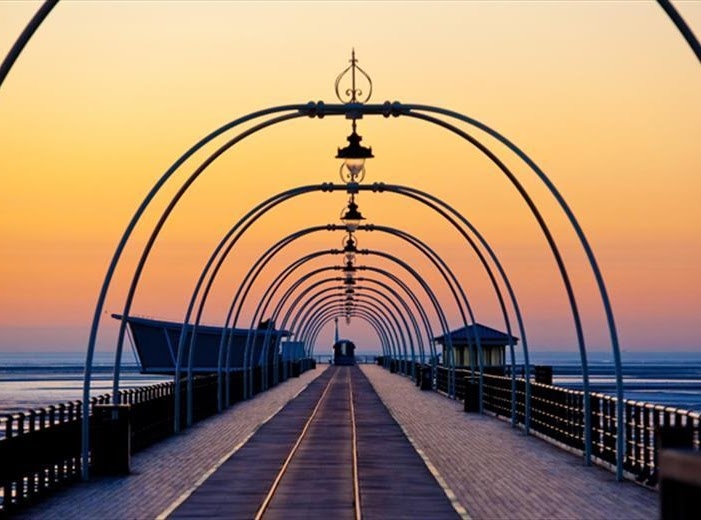
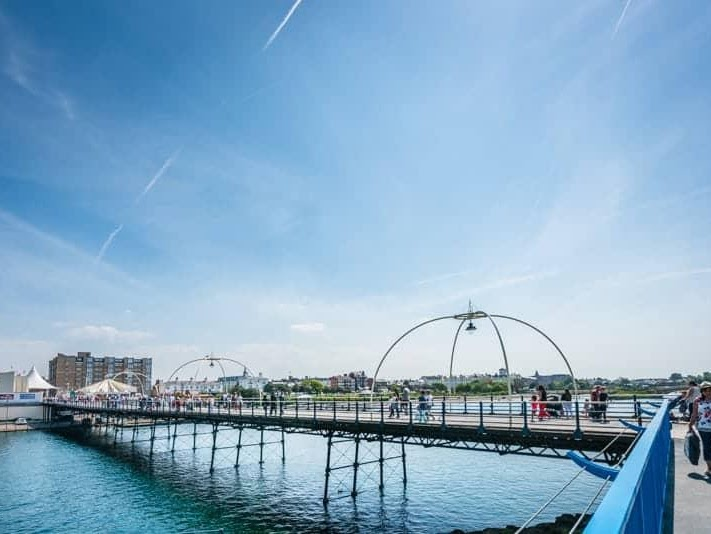
Southport Pier is a Grade II listed structure. At 3,650 feet (1,110 m), it is the second longest in Great Britain.
Southport Pier is referred to as the first true “pleasure pier”, being one of the earliest pier structures to be erected using iron. A design from James Brunlees was approved at a cost of £8,700 and on 4 August 1859 a large crowd witnessed the driving home of the first support pile. The opening of the pier was celebrated on 2 August 1860.[17]
Memorial to the crew of the Eliza Fernley lifeboat, in Duke Street Cemetery
On the night of 9 December 1886, the worst lifeboat disaster in the history of the UK occurred off the shores of Southport. A cargo ship called the Mexico[18] was on its way to South America when it found itself in difficulty. Lifeboats from Lytham, St. Annes and Southport set off to try to rescue those aboard the vessel. The crews battled against storm-force winds as they rowed towards the casualty. The entire crew from the St. Anne’s boat was lost and all but two of the Southport crew were too. In all, 28 lifeboatmen lost their lives on that night, leaving many widows and fatherless children.
A memorial was erected in Duke Street Cemetery and a permanent exhibition used to be on display in the Museum of the Botanic Gardens (now closed) in Churchtown. There is also a memorial inside the Lifeboat house, now operated by the Southport Offshore Rescue Trust. Mexico was just one of many shipwrecks in the Southport area.
From 1894 to 1912 Birkdale and the adjoining village of Ainsdale were separate from Southport and administered by Birkdale Urban District Council before becoming part of the county borough of Southport in 1912. This was a huge expansion of the town.
In 1914, A very short romance story between a “2 park road Southport “private and French lady took place in north France Valenciennes during early First World War as described by Andrée Ducatez’s book.[19]
In 1925, the RNLI abandoned the station at Southport and left the town with no lifeboat. In the late 1980s, after a series of tragedies, local families from Southport started to raise funds and bought a new lifeboat for the town stationed at the old RNLI lifeboat house.[20] The lifeboat, operated by the Southport Offshore Rescue Trust, is completely independent from the RNLI and receives no money from them. Instead it relies entirely on donations from the general public.
On 21 March 1926, Henry Segrave set the land speed record in his 4-litre Sunbeam Tiger Ladybird on the sands at Southport at 152.33 mph (245.15 km/h). This record lasted for just over a month, until broken by J.G. Parry-Thomas.
GEOGRAPHY
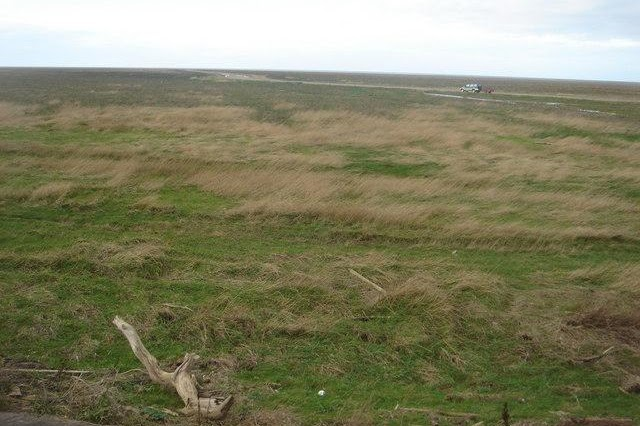
At 53°38′43.44″N 3°0′29.88″W the town is situated in North West England. The closest cities are Preston approximately 20 kilometres (12 mi) to the north east and Liverpool approximately 27 kilometres (17 mi) to the south.
Existing on the West Lancashire Coastal Plain, most of the town is only slightly above sea level and thus parts of Southport used to be susceptible to flooding. This would be most frequently noticed on Southport’s Marine Drive, which was regularly closed due to flooding from high tides. But in February 1997, new sea defences started being constructed and in 2002 the whole project was completed.[27]
Southport has a maritime climate like most of the UK. Due to its position by the coast, Southport rarely sees substantial snowfall and temperatures rarely fall below −5 °C (23 °F) so it doesn’t have frequent frosts. Southport generally has moderate precipitation, unlike the rest of western UK.[28]
The coast-to-coast Trans Pennine Trail (TPT) stretches the breadth of northern England – 215 miles (345 km) from Southport in the west to Hornsea in the east. The TPT is an exciting route for walkers, cyclists and horse riders linking the North and Irish seas and passing through the Pennines. It runs alongside rivers and canals and through some of the most historic towns and cities in the North of England. One can follow historic railways and canals and follow in the footsteps of packhorse traders on ancient salt routes.
TOURISM

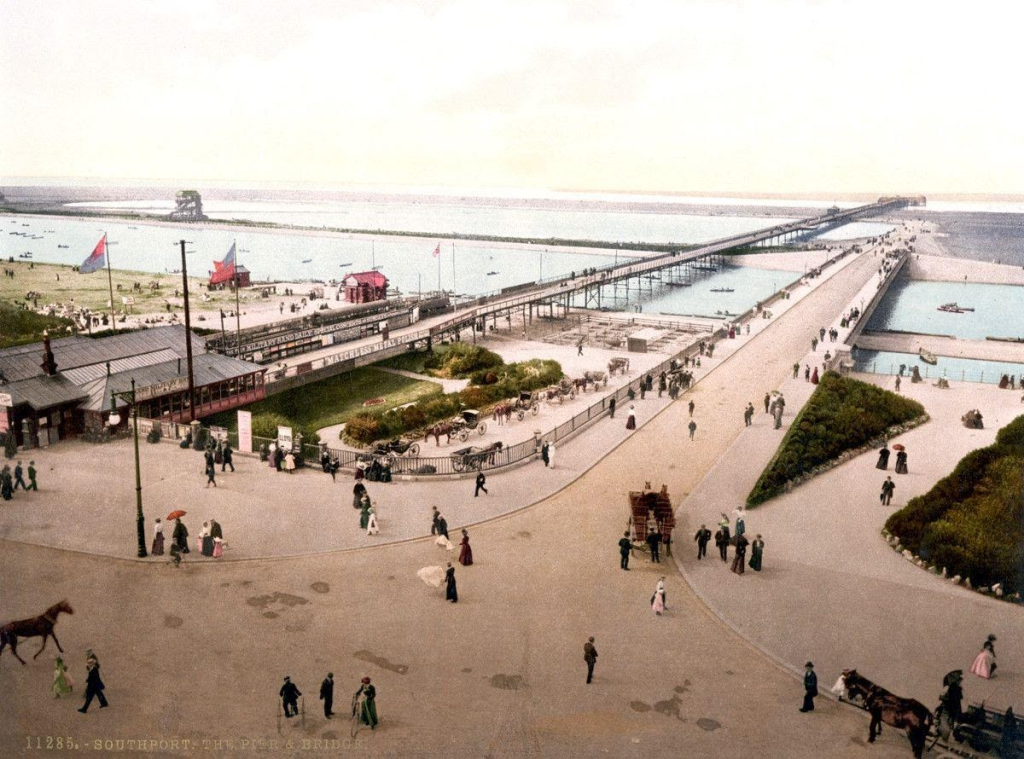
As a seaside town Southport has a long history of leisure and recreation and is still heavily dependent on tourism. The town went into decline when cheap air travel arrived in the 1960s and people chose to holiday abroad due to competitive prices and more reliable weather.[32] However, the town kept afloat with people coming to spend the day by the seaside on bank holidays and weekends. The town has diversified with annual events, shopping and conferences. In 2011, Southport was named the fourteenth-most popular coastal resort in the country, benefiting from a 23% rise in money spent in the resort in that year.[33] Part of the resort’s progress is a result of the money invested in Southport over recent years.
LANDMARKS
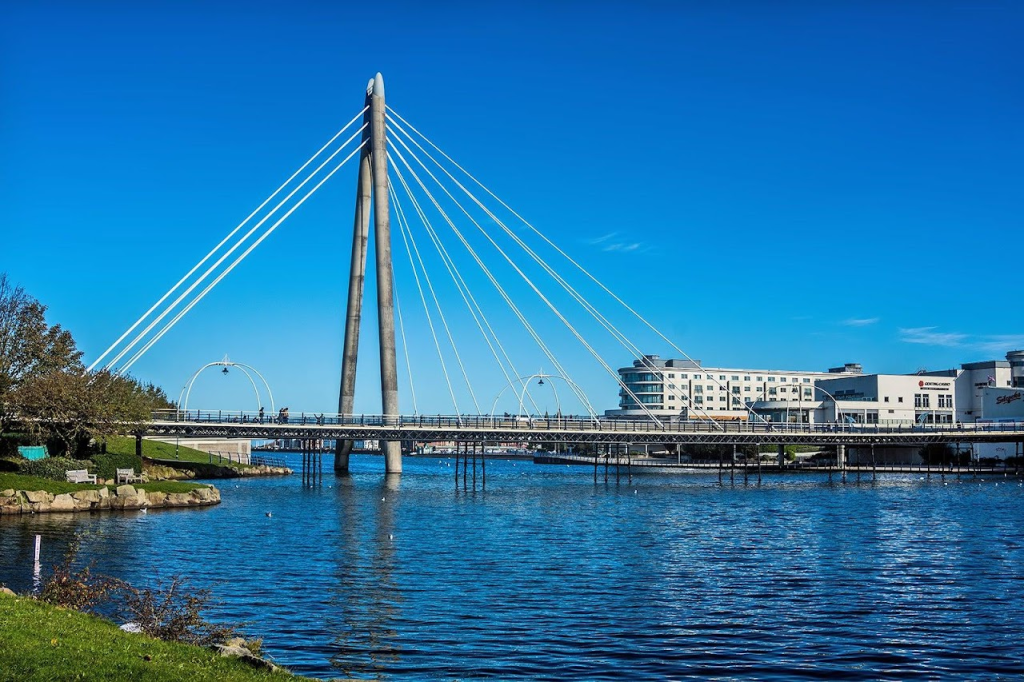
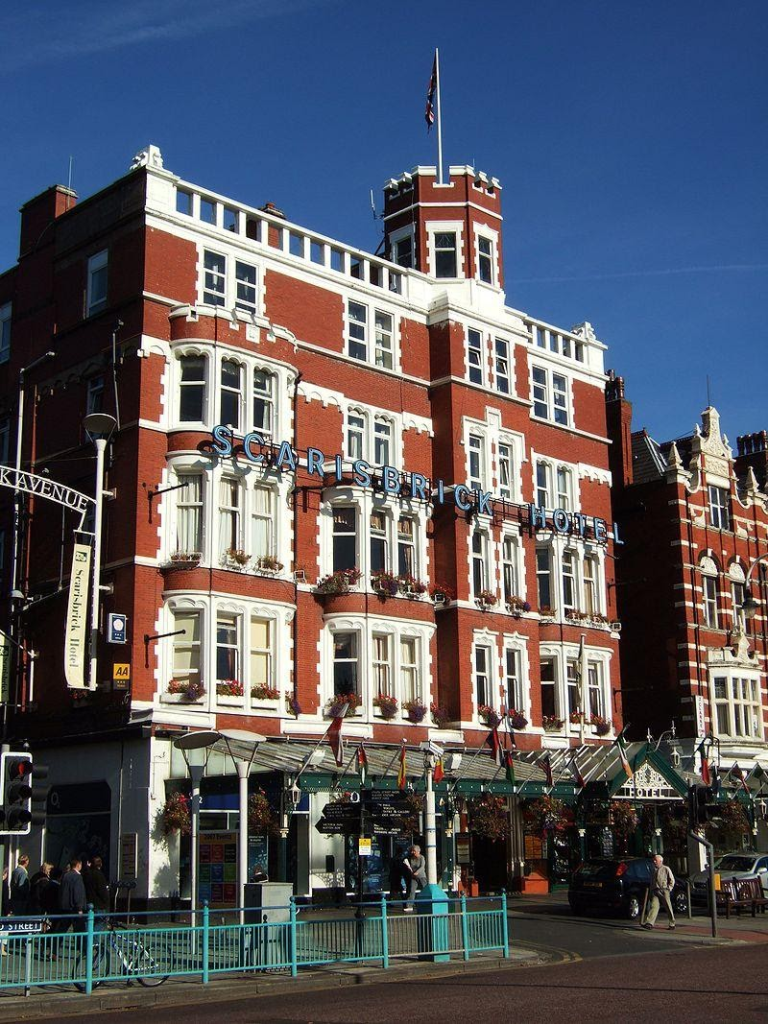

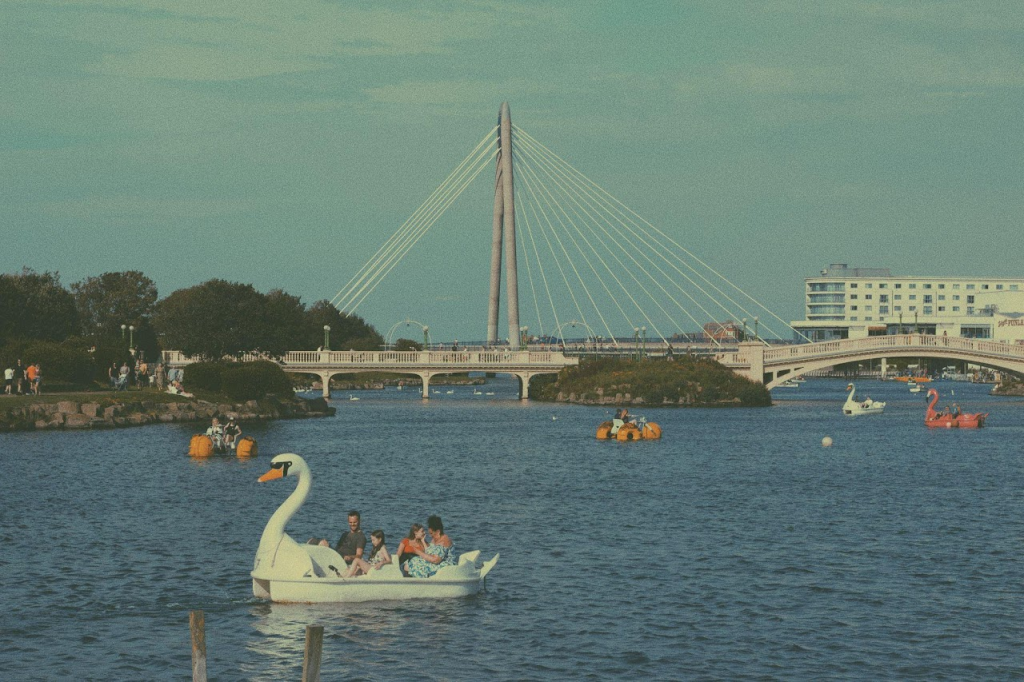
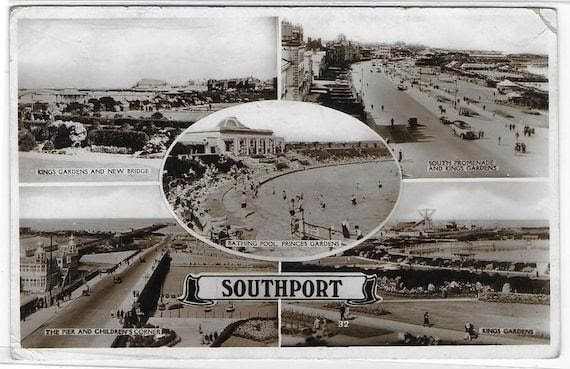
One of Southport’s main attractions for many years was Pleasureland, a fairground established in 1912. It was owned by the Thompson Family, and was closed in September 2006. A replacement fairground on the same site, provisionally named New Pleasureland,[55] opened in July 2007.[56] An earlier permanent funfair, Peter Pan’s Playground, closed in the 1980s and is now the site of part of the Ocean Plaza shopping development.
A former landmark of Pleasureland was the Looping Star roller coaster, which was on site from 1985 to 1987. It featured in the video for the pop single Wonderful Life, by Liverpool band Black, which was also shot at other parts of the Sefton and North West coastline.[57][58] On 24 April 2009 a serious fire occurred at the oldest attraction within New Pleasureland. Called The River Caves, it was completely destroyed in this arson attack, and a 16-year-old boy was arrested in connection with the fire.[59][60]
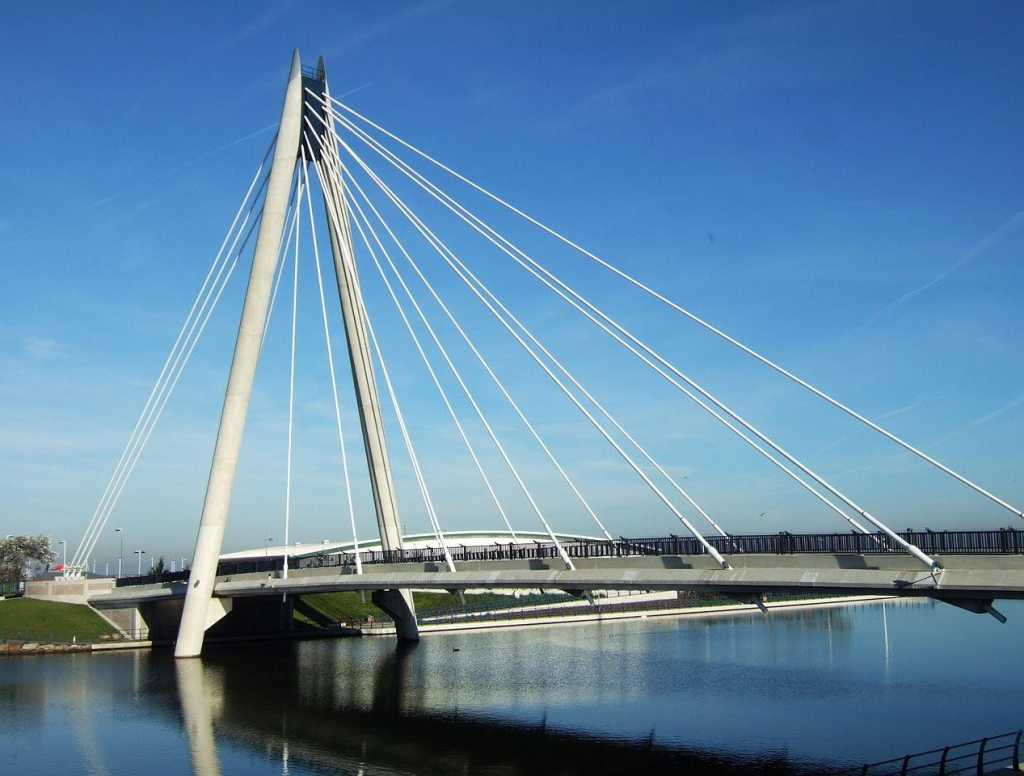
Southport Model Railway Village is situated in Kings Gardens opposite the Royal Clifton Hotel and near the Marine Lake Bridge. The Model Railway Village opened in May 1996 and was created by Ray and Jean Jones. The Jones family still run the attraction today. The Model Railway Village season extends from April to the end of October. The season has extended into weekend openings during November, February and March, weather permitting.[61] An earlier model village, the Land of the Little People, was demolished in the late 1980s to make way for the aborted Winter Gardens/SIBEC shopping development. Its site is now occupied by a Morrison’s supermarket.
Other major attractions in Southport include Splash World, an indoor water park situated on the back of the Dunes swimming pool which opened in June 2007.[62]
Meols Hall,[63] a manor house, home of the Hesketh family, is open to the public for a limited period each year. Set in its own expansive grounds, it boasts a history back to the Domesday Book and is full of interesting pictures and furniture.
Southport also boasts one of the few lawnmower museums.[64]
The Power Station, that was the base of the town’s former radio station Dune FM, on the edge of Victoria Park, which itself is home to the Southport Flower Show.
RAILWAY STATION
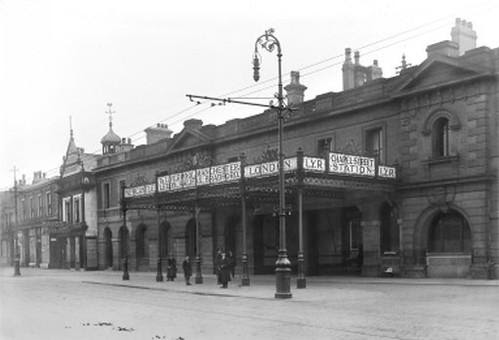

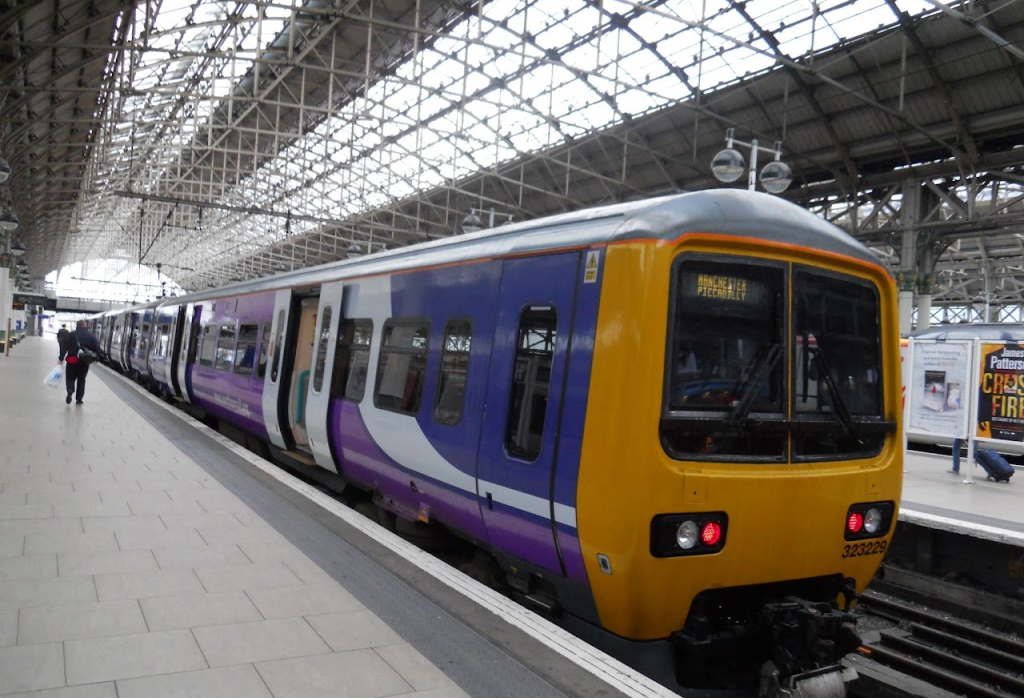
Southport railway station has a frequent service of trains to Liverpool, operated by Merseyrail and a regular service to Wigan, Bolton, Manchester and Leeds. In addition, there are stations at Birkdale, Hillside and Ainsdale on the Liverpool line, part of the Merseyrail network, and at Meols Cop on the Manchester line.
The Liverpool line was originally built by the Liverpool, Crosby and Southport Railway in 1848, to a terminus at Eastbank Street. It was followed on 9 April 1855 by the Manchester and Southport Railway with a line to Manchester via Wigan, with stations at St Luke’s and Blowick.
Formerly, Southport was also served by three further railway lines:
From 1882, the West Lancashire Railway operated from Southport Derby Road station (also known as Southport Central) to Preston Fishergate Hill. It had stations in Southport at Ash Street, St Luke’s, Hesketh Park, Churchtown and Crossens. This line was shut in 1964, and nowadays, Southport and Preston are linked only by the (largely dual-carriageway) A565 and A59 roads.
In 1884, another line from Southport to Liverpool was opened: the Cheshire Lines Committee’s Southport & Cheshire Lines Extension Railway extended the CLC’s North Liverpool Extension Line from Liverpool Central to Southport Lord Street. It had stations in Southport at Birkdale Palace and Ainsdale Beach.
The West Lancashire Railway sponsored the Liverpool, Southport and Preston Junction Railway to provide a connection to the CLC line, joining it at Altcar and Hillhouse.[71] It had stations in Southport at Butts Lane and Kew Gardens. These lines ultimately proved uncompetitive, and the Southport services were withdrawn in 1952.
In July 1897, both the West Lancashire and the Liverpool, Southport and Preston Junction Railways were absorbed into the Lancashire and Yorkshire Railway (L&Y). The L&Y had a large terminus at Southport Chapel Street and could see no sense in operating two termini at very close proximity. In 1901, the L&Y completed a remodelling of the approach lines to Central to allow trains to divert onto the Manchester to Southport line and into Southport Chapel Street Station. Southport Central was closed to passengers and it became a goods depot eventually amalgamating with Chapel Street depot. It survived intact well into the 1970s.
On Southport Pier can be found the now closed Southport Pier Tramway which used to transport passengers from the Promenade to the pier head over 3,600 feet (1,100 m) on a 3 ft 6 in (1,067 mm) gauge. This closed in 2016[72] because of the effect on the pier of the weight of the trams.
The Lakeside Miniature Railway passes under the pier, carrying passengers along the western side of the marine lake. The line claims to be the oldest continuously running 15 in (381 mm) gauge railway in the world.
WATER

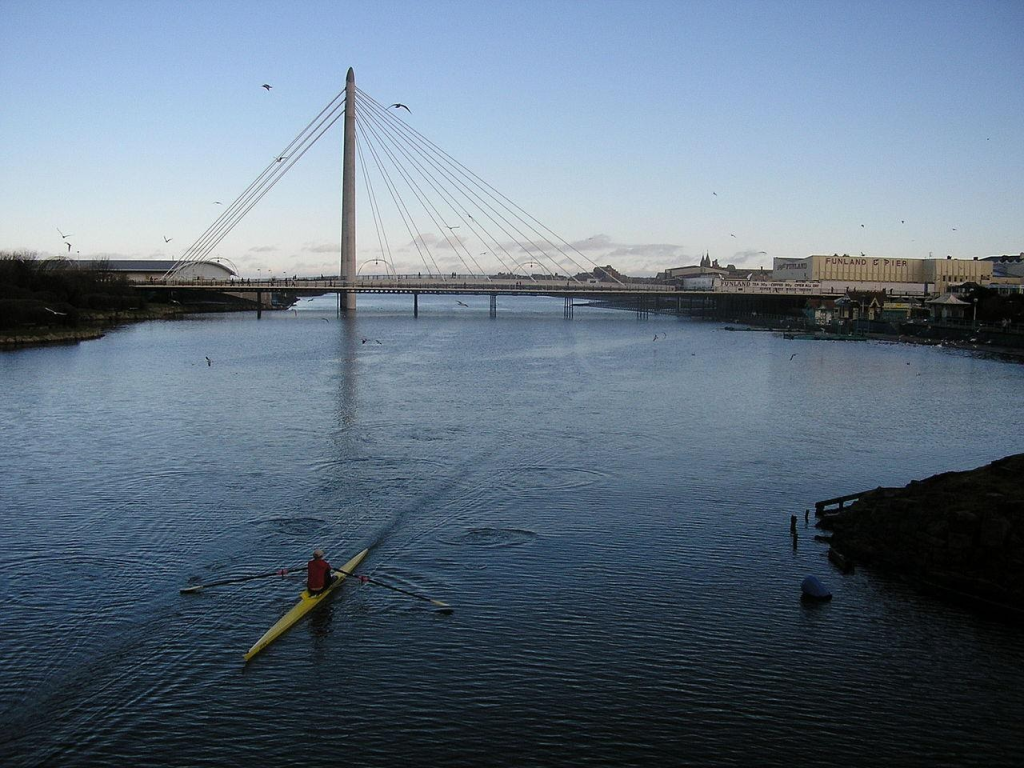
Marine Lake lies nestled between the town centre and the sea and is used for a variety of water-sports including water-skiing, sailing and rowing. The lake is home to the West Lancashire Yacht Club and Southport Sailing Club, both of which organise dinghy racing. The annual Southport 24 Hour Race, organised by the West Lancashire Yacht Club, is an endurance race of national standing, with an average turnout of 60 to 80 boats. In 2006, the event marked its 40th anniversary.
NOTABLE PEOPLE
Harold Ackroyd VC MC, recipient of the Victoria Cross in World War I
Jean Alexander, Coronation Street and Last of the Summer Wine actress
Marc Almond OBE, lead singer of Soft Cell
Dora Bryan OBE, actress
Kenneth Cope, Coronation Street, Randall and Hopkirk (Deceased) and Brookside actor
Kenny Dalglish (Sir Kenneth Mathieson Dalglish MBE) footballer, football manager
Frank Hampson, artist, creator of Dan Dare
Alan Hansen, footballer, television pundit
Lee Mack, comedian
Ginger McCain, racehorse trainer
Wilfred Pickles, actor and broadcaster
Miranda Richardson, actress
Alexei Sayle, stand-up comedian, actor, author and former recording artist
Doris Speed MBE, Coronation Street actress
Red Rum, record-breaking racehorse and three-time winner of the Aintree Grand National